
Dark workshop.
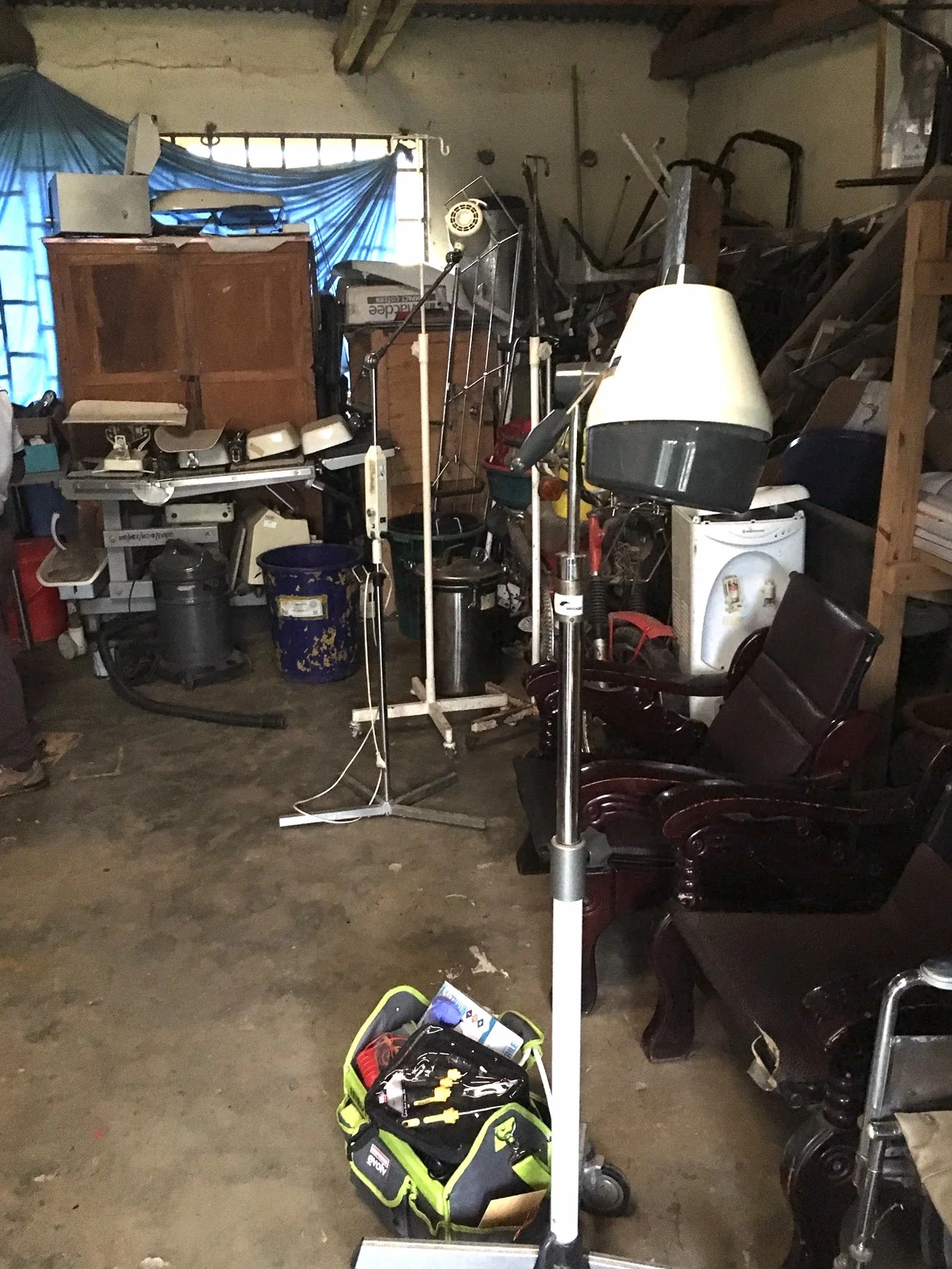
Biomed workshop and storage. Arusha, Tanzania, 2019
When training large and small groups around the world’s hospitals, I’ve often ended up working in a kitchen. But the local BMETs are not so lucky. Rarely are biomed workshops purpose-built or fitted out unless there is a direct intention to do so. Mostly, the hospital has a technician or handyman or similar person who has some hand-skills or technical skills. Sometimes, for instance, a dental technician can also fix a steriliser, but mostly the available technical skills are spread around various other repair and maintenance needs; workshops often become store-rooms for junk.
Working in Tz, I found myself wondering about the limited resources for biomeds both there and around the world. Some quick maths showed that the country’s combined public hospital biomed services operate on three-percent of the resources I enjoy when working as a biomed in Australia. The relevant metric is around 0.06 BMETs per 10K of population. Australia has 1.5-2.0 BMETs per 10K (depending on how you measure it).
Would you go to work every day for 3% of your current pay, or would you move elsewhere? Or work as a contractor for private-industry? How do we, as a global community of biomedical engineers, respond to the brain-drain? How do healthcare workers, administrators, recruiters and trainers respond?